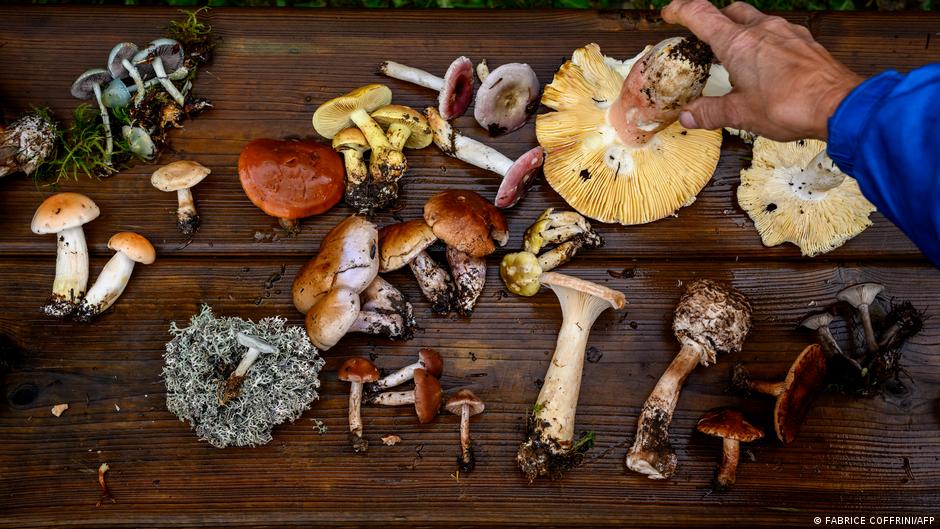
The classification of fungi has been rewritten almost entirely in the last 30 years. Turns out we had it badly wrong for a very long time.
For most of scientific history, fungi were classified as plants. They were sessile, they didn't move, they grew from the ground — plant enough. Linnaeus put them in the plant kingdom in 1753 and there they stayed, more or less, for the better part of two centuries.
The problem is that fungi are not plants in any meaningful sense. They have no chlorophyll, no photosynthesis, no cellulose cell walls. They feed by secreting enzymes and absorbing the breakdown products. They store energy as glycogen, not starch. Their cell walls are made of chitin — the same material in insect exoskeletons.
Molecular phylogenetics — the ability to compare DNA sequences directly — finally settled the matter in the 1990s. Fungi and animals diverged from a common ancestor approximately 1.5 billion years ago. Fungi and plants diverged from a common ancestor approximately 1.1 billion years ago. Fungi are, in a very real sense, more closely related to you than to a fern.
They now occupy their own kingdom: Fungi. Separate from Plantae, separate from Animalia, separate from Protista and Bacteria and Archaea. Six kingdoms total, and fungi are one of them.
All organisms with cells containing a nucleus. Includes animals, plants, fungi, and protists. Distinguished from Bacteria and Archaea by cellular complexity.
Heterotrophic eukaryotes with chitinous cell walls. Feed by extracellular digestion and absorption. Reproduce by spores. Estimated 2–6 million species. Formally described: ~150,000.
The five major phyla. Ascomycota and Basidiomycota together make up the Dikarya — the "higher fungi" — and contain the vast majority of described species including almost all cultivated mushrooms.
| Feature | Fungi | Plants | Animals |
|---|---|---|---|
| Cell wall | Chitin | Cellulose | None |
| Energy storage | Glycogen | Starch | Glycogen |
| Nutrition | Absorptive (external digestion) | Photosynthesis | Ingestive (internal digestion) |
| Growth pattern | Hyphal (tip growth) | Meristematic | Embryonic development |
| Motility | None (spores disperse) | None (pollen/seeds disperse) | Most are motile |
| Carbon source | Organic compounds | CO₂ (photosynthesis) | Organic compounds |
| Closest relative | Animals | Green algae | Fungi |
The classification below covers the orders and families most relevant to mycologists, cultivators, and anyone who eats mushrooms. It is not exhaustive — there are hundreds of families — but it covers what you're most likely to encounter.
Contains Agaricus (the classic button and portobello mushroom), Lepiota (parasols), and Macrolepiota. One of the most economically important fungal families. Also contains Amanita — the most deadly genus in the kingdom.
Contains Pleurotus — the oyster mushrooms. Fast-growing, ligninolytic (breaks down lignin), highly nutritious, and among the easiest fungi to cultivate. Pink, blue, golden, and king oyster are all Pleurotus species.
Contains Psilocybe (psilocybin-containing species), Stropharia (wine cap), and Hypholoma. A taxonomically complex family with both edible and psychoactive species. Wine cap (Stropharia rugosoannulata) is an excellent cultivated edible.
Contains Lentinula edodes (shiitake) — one of the most widely cultivated edible mushrooms globally. Also contains Marasmius (fairy bonnet mushrooms) and Omphalotus (jack o'lantern, bioluminescent and toxic).
Contains Turkey Tail (Trametes versicolor), Reishi (Ganoderma lucidum), and most bracket fungi. These are wood rotters — they break down dead and living trees. Primarily of medicinal interest, containing powerful immunomodulatory polysaccharides.
Contains Hericium erinaceus (lion's mane) and relatives. Produce distinctive tooth or spine-like fruiting bodies rather than gills. Lion's mane is one of the most studied fungi for potential neurological benefits and is among the most prized culinary species.
Contains Morchella — the true morels. Highly prized edible fungi with a honeycomb-patterned cap. Notoriously difficult to cultivate. Form mycorrhizal relationships with trees. The false morel (Gyromitra) is poisonous and superficially similar.
Contains Boletus (porcini, cep) — the most prized edible mushrooms in European cuisine. Identifiable by their spongy pore surface rather than gills. Largely mycorrhizal and extremely difficult to cultivate. Also contains Satan's bolete (Rubroboletus satanas), which is poisonous.
Contains Cantharellus (chanterelles) and Craterellus (black trumpet). Golden-yellow, funnel-shaped, with false gills (forking ridges rather than true gill plates). Exceptional flavour. Mycorrhizal — cannot be cultivated. Foraged from deciduous woodland.
The stinkhorns. Emerge from an "egg" and expand rapidly — sometimes hours. Covered in foul-smelling gleba (spore mass) that attracts flies for dispersal. Phallus impudicus was reportedly used as an aphrodisiac in Victorian England. Edible in the egg stage, apparently.
Contains Cordyceps and Ophiocordyceps — the insect-parasitising fungi. Different species target different hosts: ants, beetles, moths, spiders. Each species manipulates its host's behaviour before killing and fruiting from the corpse. Cordyceps militaris is cultivated for medicinal use.
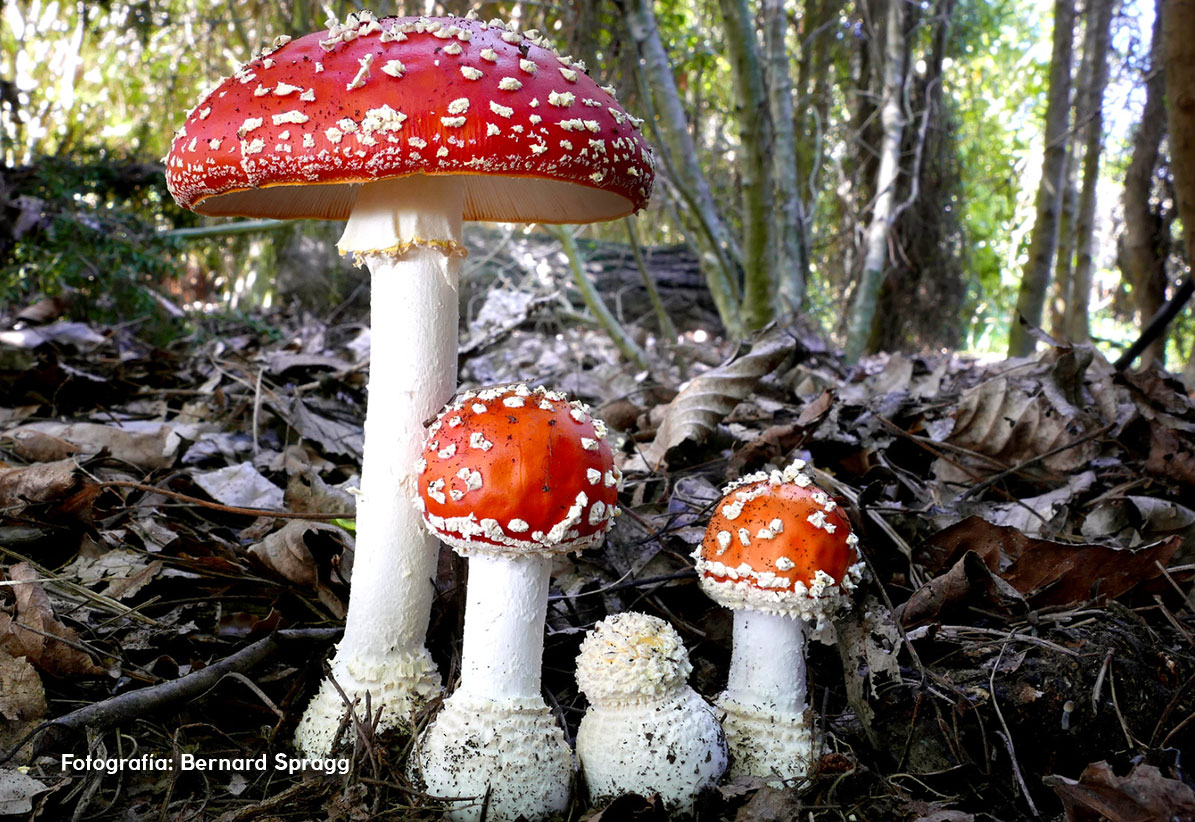
Contains the most deadly mushrooms on Earth. Amanita phalloides (death cap) causes the majority of fatal mushroom poisonings worldwide. Amanita muscaria (fly agaric) is the iconic red-and-white mushroom — psychoactive but not psilocybin-containing. Also contains some edible species, including the prized Caesar's mushroom.
Fungal taxonomy is in constant flux. Molecular sequencing keeps revealing that species which looked identical are genetically distinct, and species that looked different are the same. The oyster mushroom you think of as Pleurotus ostreatus is actually a species complex of several closely related organisms that are only distinguishable by DNA.
Similarly, genera get split and merged. Turkey tail was Polyporus versicolor, then Coriolus versicolor, then Trametes versicolor. The scientific name in a field guide from 1990 may have been revised several times since. The species finder on iNaturalist will often show you synonyms precisely because of this.
Common names are worse. "Oyster mushroom" refers to dozens of species. "Magic mushroom" refers to over 200. "Toadstool" means nothing at all scientifically. Latin names are annoying but they're the only reliable way to know what you're actually talking about.