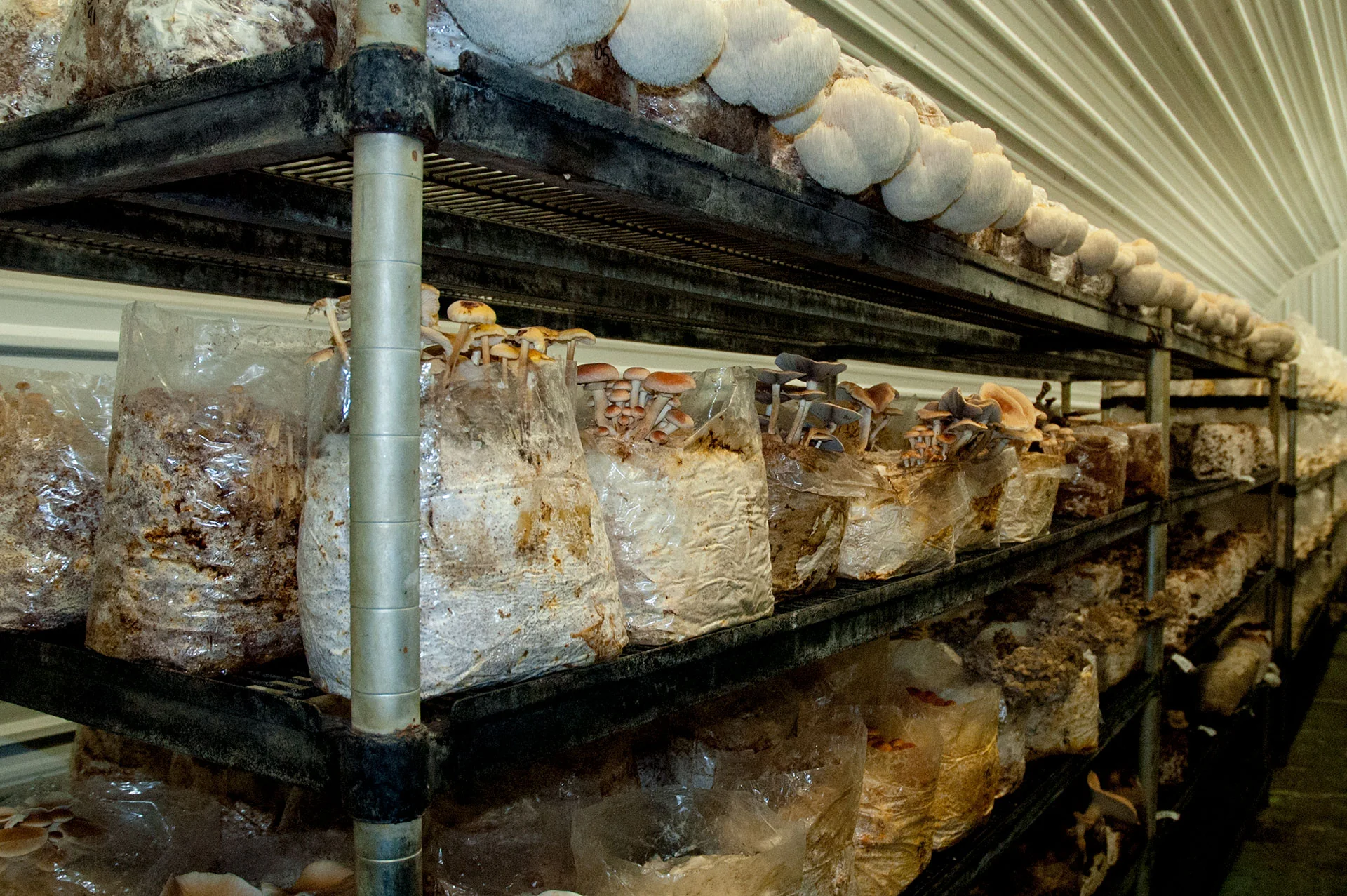
The full cultivation workflow — from your first still air box to running a flow hood. Sterilisation, agar work, grain spawn, bulk substrate, and fruiting. Plus what goes wrong and why.
Everything in mushroom cultivation comes down to one principle: your mycelium needs to colonise the substrate before anything else does. Contamination doesn't happen because you're unlucky — it happens because you gave competitors an opening. Sterile technique closes those openings.
You have two main options for creating a sterile workspace: a still air box (SAB) or a laminar flow hood. They operate on completely different principles and have different appropriate uses.
60–110L is ideal. Clear lets you see what you're doing. The bigger the better — more air volume means slower air movement and longer work windows. Bunnings or IKEA totes work fine.
Two circular holes in the long side, shoulder-width apart, sized to fit your forearms comfortably (about 15cm diameter). A jigsaw or hole saw works. Sand the edges — you'll be pressing your arms against them for extended periods.
Spray the inside with 70% isopropyl alcohol, let it settle for 10 minutes. Work slowly — sudden movements stir up air. Don't talk, cough, or breathe directly into the box. Flame-sterilise tools between each use. Keep the lid on when not working.
A pressure cooker running at 15PSI raises the boiling point of water to approximately 121°C — hot enough to kill bacterial endospores, which survive regular boiling. This is what separates sterilisation from pasteurisation.
You need a pressure cooker that can hold 15PSI — most modern stovetop pressure cookers can. An electric instant pot generally cannot reach the required pressure for sterilisation. Check your model's specifications.
Fill mason jars 50–60% with prepared grain. Add 0.5–1cm of water above the grain surface. Loosely fit lids (or use self-healing injection ports and filter discs). Place on a trivet in the pressure cooker with water in the base. Bring to pressure, then run at 15PSI for 90 minutes. Allow to cool completely in the pot — minimum 6 hours, overnight is better. Never remove from pressure before pressure has fully dropped naturally.
Mix agar powder and malt extract (or potato dextrose) in water in a heat-safe flask or mason jar. Loosely cap. Sterilise at 15PSI for 30 minutes. Pour into petri dishes while still liquid (above 55°C but below 60°C) in front of the flow hood or SAB. Let solidify with lids slightly ajar — a gap prevents condensation forming on the agar surface, which causes problems later.
Supplemented hardwood blocks need full sterilisation at 15PSI for 2.5–3 hours. Unsupplemented hardwood and coco coir can be pasteurised (boiling water soak for 1 hour) rather than sterilised. Straw is pasteurised — 65–82°C for 1–2 hours, either hot water soak or lime soak (hydrated lime raises pH enough to kill most competitors without sterilisation).
Agar is a gelatinous medium that supports fungal growth in a visible, controllable way. It's where you start cultures, isolate clean sectors, and maintain genetics long-term. It's also where most beginners give up — which is a shame, because the learning curve is short and the payoff is significant.
Malt extract: 20g. Agar powder: 20g. Water: 1 litre. Nutritional yeast (optional): 1g. Dissolve malt extract in warm water, add agar, mix well. Pour into mason jars or flasks and sterilise. Alternative: potato dextrose agar (PDA) uses 200g boiled potato water instead of malt extract.
Make a spore print on foil. Dissolve a small amount in 10ml sterile water in a syringe. Streak lightly across the agar surface in front of the flow hood. Seal plates with micropore tape (not parafilm — it causes anaerobic conditions). Label with species and date. Store at 20–24°C and watch for germination in 3–14 days.
Tear (don't cut — tearing exposes interior tissue away from surface contaminants) a small piece from inside a fresh cap. Work quickly at the flow hood. Place on agar and seal. Germination in 2–5 days. Tissue culture captures the genetics of the specific specimen — useful for preserving an exceptional find.
When mycelium appears, look for sectors with strong, even, white growth. Cut a small wedge from the leading edge of a clean sector and transfer to a fresh plate. Repeat 2–3 times until you have a stable, uncontaminated isolate. This process — serial transfer — removes slow-growing or contaminated genetics and selects for vigour.
A suspension of mycelium in sugar water (honey, corn syrup, or malt extract at 2–4% in sterile water). Inoculate with agar wedge or spore syringe. Shake or stir regularly. Use within 2–4 weeks. Delivers mycelium directly to grain via syringe through an injection port — faster colonisation and lower contamination risk than agar-to-grain transfers for many species.
Fully colonised grain is the most versatile spawn medium — fast, dense, easy to distribute through bulk substrate. Rye is the standard. Wheat berries work well and are cheaper. Oats, millet, and popcorn also work. Each has slightly different moisture retention and colonisation characteristics.
Simmer grain until hydrated but not burst — about 15–20 minutes for rye. Drain, spread on a tray, and dry the surface until no moisture is visible on the grains (a fan helps). Fill mason jars 50–60% full — overfilling prevents shaking and leads to uneven colonisation. Sterilise 90 minutes at 15PSI.
Via agar wedge at the flow hood — open the jar, drop in the wedge, reseal immediately. Via liquid culture — inject through a self-healing injection port, no need to open the jar. Via spore syringe — inject through the port. Agar-to-grain and LC inoculations are significantly more reliable than spore syringes for most species.
Watch for white mycelial growth from the inoculation point, typically visible in 3–7 days. When growth covers 30–40% of the jar, shake vigorously to distribute mycelium throughout the grain. This dramatically accelerates colonisation. Shake once more when regrowth is visible. Full colonisation in 2–4 weeks depending on species and temperature.
Trichoderma. The most common contaminant. Bright to dark green. Fast-spreading. Produces compounds antagonistic to other fungi. Discard immediately — double-bag, remove from growing area before opening. Usually indicates inadequate sterilisation or a breach in technique at inoculation.
Usually Aspergillus. Dark green-black. Produces mycotoxins — some species are serious health hazards. Discard immediately, double-bag. Wear a mask when handling. More common in supplemented substrates and in humid, warm conditions. Indicates sterilisation failure.
Neurospora or Fusarium. Bright pink/orange/red powdery growth. Neurospora spreads extremely rapidly via airborne conidia — it has contaminated entire labs. Isolate immediately. Do not open the container indoors without a filter mask.
Bacterial. Slimy, wet, foul-smelling patches. Caused by bacteria surviving insufficient sterilisation. Usually indicates under-pressure or under-time in the autoclave. Discard. Reassess your pressure cooker setup — get a reliable pressure gauge if you haven't got one.
Often metabolites from the mycelium, not contamination. Many species (shiitake especially) produce yellow or brown exudates during consolidation. No off smell is a good sign. Smell the jar/bag — contamination usually has a distinctive sour, musty, or chemical odour. Observe before discarding.
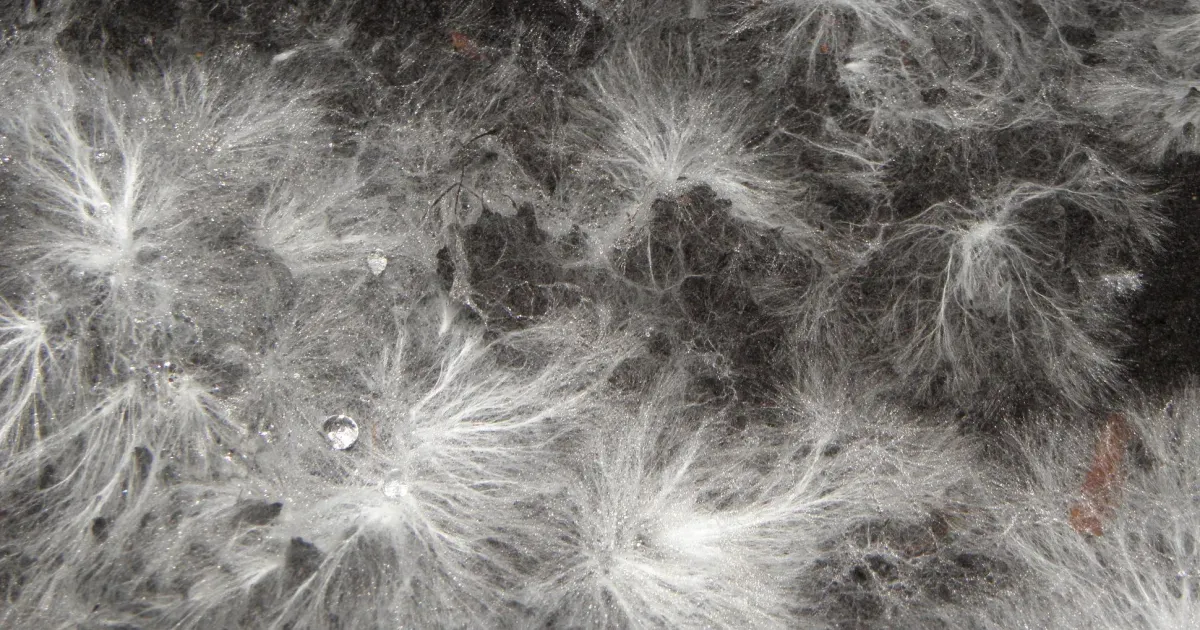
Could be your mycelium — or could be a competing fungus. Check that it originates from the inoculation point and spreads in a consistent pattern. A competing white mould usually looks different in texture — more powdery, less ropy, irregular growth pattern. When in doubt, wait and watch.